Christian Dior Company History: New Look to a Global Luxury Powerhouse
When we think of timeless fashion, Christian Dior stands as one of the most iconic luxury brands in the world. Known for its haute couture, perfumes, handbags, and accessories, Dior revolutionized fashion after World War II and continues to influence global style today. Understanding the history of Christian Dior gives insight into how a small Parisian fashion house grew into a worldwide empire.
How did a small Paris couture house become one of the world’s most influential luxury brands? This deep dive into Christian Dior company history unpacks the “New Look” revolution of 1947, the evolution of the House through its creative directors, the rise of perfumes and accessories, and the brand’s modern chapter within LVMH. If you’re researching the history of Christian Dior for study, collecting, or pure fashion love, this timeline and context-rich guide has you covered.
Origins: The Roots of a Legend (1905–1946)
- Christian Dior (1905–1957), born in Granville, Normandy, began as a gallerist before moving into fashion illustration and design in 1930s Paris.
- During WWII, he worked under Lucien Lelong, designing dresses while France’s couture industry struggled under occupation.
- With backing from textile magnate Marcel Boussac, Dior founded his couture house on December 16, 1946, at 30 Avenue Montaigne—an address that remains the spiritual heart of the brand.
Why it matters for the history of Christian Dior: The founder’s mix of artistic sensibility, business pragmatism, and a postwar appetite for beauty set the stage for a seismic shift in fashion.
The Rise of Dior’s “New Look”
The “New Look” quickly became a global phenomenon. Women embraced Dior’s designs because they symbolized beauty, luxury, and a return to elegance after years of rationing. The success of this collection positioned Dior’s fashion house as a leader in haute couture, setting the tone for modern luxury fashion.
Expansion Beyond Couture
In the early years, Dior expanded beyond clothing into accessories, shoes, and perfumes. The launch of Miss Dior perfume in 1947 was another milestone in the Christian Dior brand history, as it combined fashion with fragrance, making the brand accessible to more women worldwide. This strategic move made Dior one of the first luxury houses to diversify.
Christian Dior’s Untimely Death
Tragically, Christian Dior passed away in 1957, just a decade after founding his house. However, his legacy was carried on by talented designers such as Yves Saint Laurent, who became Dior’s creative director at only 21 years old. Later, other visionary designers like Marc Bohan, Gianfranco Ferré, John Galliano, Raf Simons, and Maria Grazia Chiuri shaped Dior’s evolution.
Dior in the Modern Era
Today, the Dior fashion house is part of the LVMH luxury group and continues to be one of the most powerful luxury brands worldwide. Dior is celebrated for its handbags, such as the Lady Dior, Saddle Bag, and Book Tote, which remain popular among celebrities and fashion enthusiasts. The company has successfully balanced tradition with modern trends, making Dior both historic and contemporary.
The New Look 1947: A Fashion Earthquake
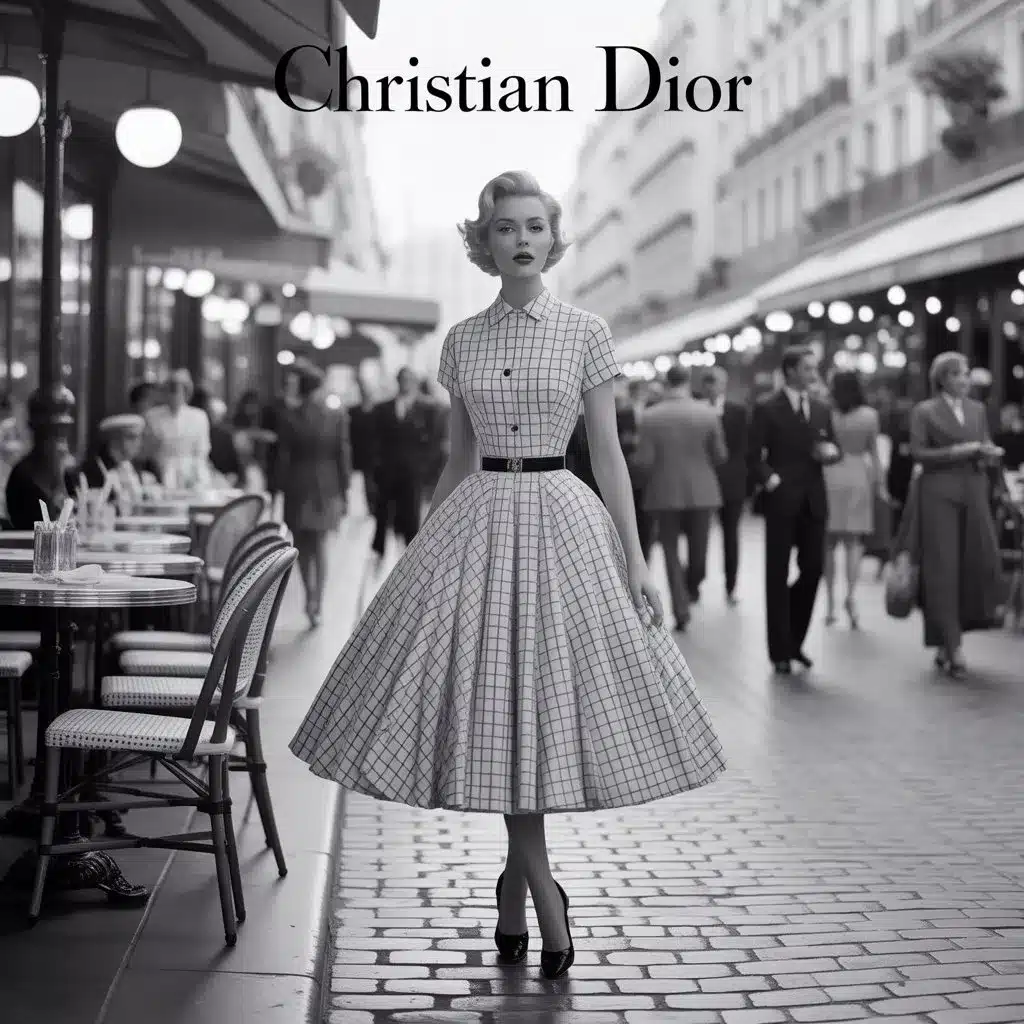
On February 12, 1947, Christian Dior presented his debut collection, featuring the now-iconic Bar jacket with a nipped waist and a voluptuous, mid-calf skirt. Harper’s Bazaar’s editor Carmel Snow reportedly exclaimed, “It’s such a new look!” The name stuck—and the world took notice.
What defined the New Look:
- Hyper-feminine silhouette after wartime austerity
- Emphasis on construction, volume, and luxury fabrics
- The Bar jacket, still a Dior code today
The same year, Miss Dior perfume (1947) launched, introducing a fragrance pillar that would become central to Dior perfumes history and to the broader Christian Dior brand history.
Rapid Expansion: Licensing, America, and a Global Audience (1948–1957)
Dior expanded swiftly:
- 1948: Dior New York opened; international growth accelerated through boutiques and strategic licenses (hosiery, ties, and more). Licensing—controversial to purists—helped propel Dior from couture atelier to global brand.
- 1950s: Seasonal “lines” (e.g., H-Line, A-Line, Y-Line) showcased evolving silhouettes, but the House’s signature remained refined structure and impeccable fit.
- Training talent: A young Yves Saint Laurent joined in 1955 as Dior’s assistant.
The tragedy and transition:
- In 1957, Christian Dior died unexpectedly. At just 21, Yves Saint Laurent became artistic director, debuting the light, fluid “Trapeze” line (1958) before leaving in 1960 for military service.
Stability and Elegance: Marc Bohan’s Era (1960–1989)
Marc Bohan succeeded Saint Laurent in 1960 and steered Dior for nearly three decades. His aesthetic was elegant, refined, and wearable—keeping clients loyal through massive cultural change.
Key milestones:
- Ready-to-wear expansion: Miss Dior RTW (late 1960s), Baby Dior (1967), Dior Monsieur menswear (1970)
- Cosmetics: Dior Makeup blossomed toward the end of the 1960s
- House codes: The Bar jacket, cannage quilting (inspired by Napoleon III chairs), and Dior gray became signatures
Business backdrop in the Christian Dior timeline:
- Parfums Christian Dior, established alongside couture, grew into a global beauty leader. Over time, Dior’s perfumes and cosmetics became core maisons within what is now LVMH.
Ownership Shifts and a New Corporate Chapter (1984–present)
- 1984: Following the financial troubles of Boussac, Bernard Arnault acquired the group’s assets, refocusing on Dior as the crown jewel.
- LVMH and Dior: Through Christian Dior SE (the Arnault family holding), Dior became deeply connected to LVMH’s growth.
- 2017: LVMH acquired Christian Dior Couture, bringing the fashion house fully under the LVMH umbrella, while Christian Dior SE remained the principal holding company that controls LVMH.
Why this matters in Christian Dior company history: The LVMH era provided capital, retail scale, and strategic stability, enabling Dior to expand globally without losing its couture soul.
Designers Through the Years: From Ferré to Chiuri
A concise look at Dior’s creative leadership—central to any Christian Dior brand history.
| Years | Creative Director (Womenswear unless noted) | Highlights |
|---|---|---|
| 1946–1957 | Christian Dior (founder) | New Look 1947, Bar jacket, Miss Dior perfume |
| 1957–1960 | Yves Saint Laurent | Trapeze line, youthful ease |
| 1960–1989 | Marc Bohan | Elegant restraint, RTW expansions, Baby Dior |
| 1989–1996 | Gianfranco Ferré | Architectural couture, purity of line; created the bag later known as Lady Dior (1995) |
| 1996–2011 | John Galliano | Theatrical couture; Dior Saddle bag history begins (1999), era-defining shows |
| 2012–2015 | Raf Simons | Modernist minimalism, garden couture, renewed focus on the Bar jacket |
| 2016–present | Maria Grazia Chiuri | First female creative director; feminism, artisanship, and codes reimagined; revived the Saddle bag (2018) |
Dior menswear:
- 2000–2007: Hedi Slimane at Dior Homme, defining the skinny silhouette
- 2007–2018: Kris Van Assche, streamlined tailoring
- 2018–present: Kim Jones at Dior Men, fusing couture craft with street culture and collaborations
Accessory Icons: Lady Dior and the Saddle Bag
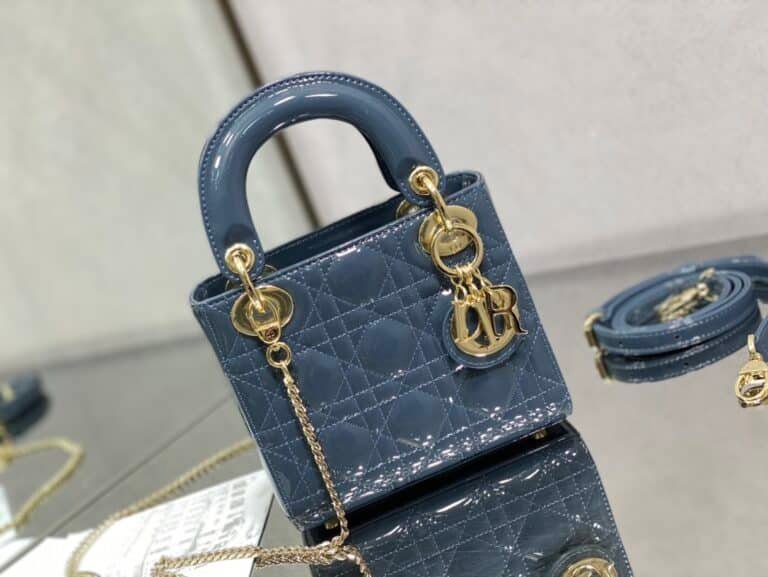
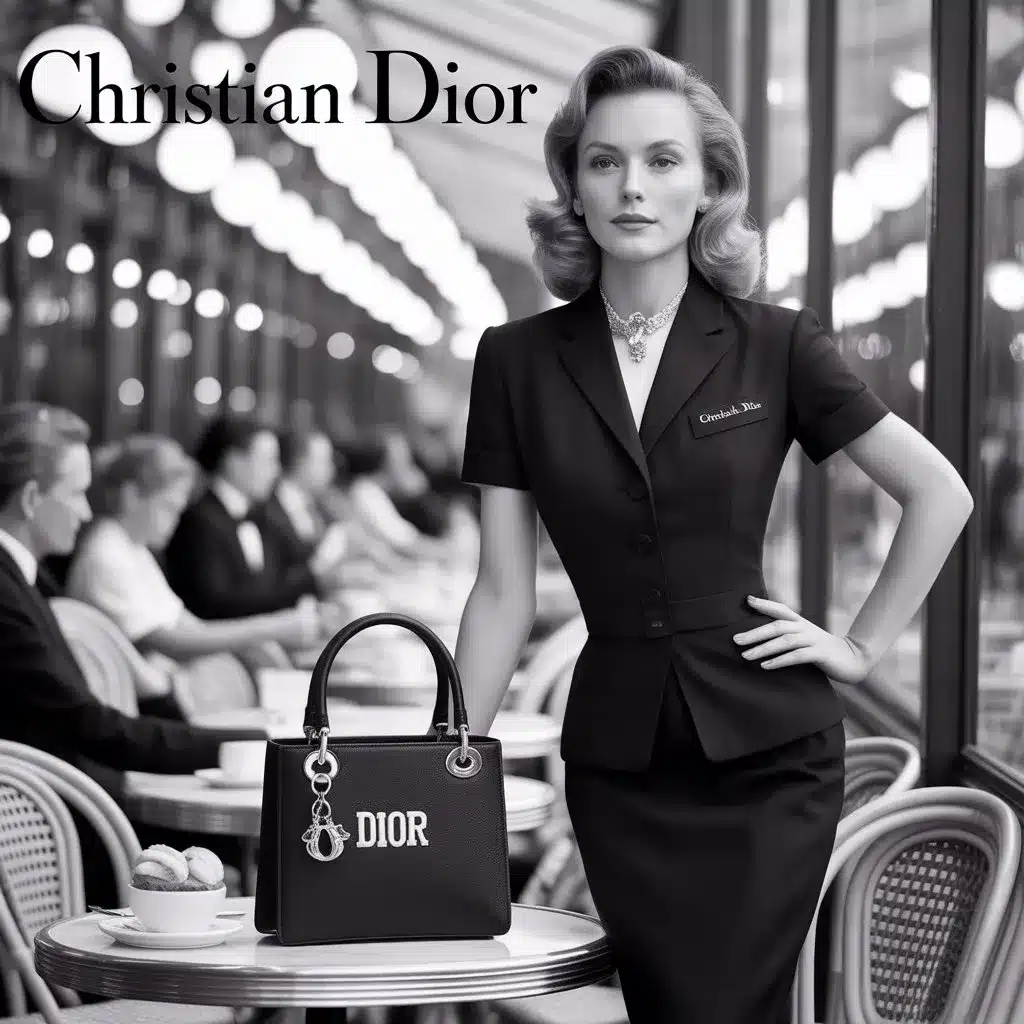
- Lady Dior history (1995): Introduced during Ferré’s tenure as the “Chouchou,” the bag gained its name after Princess Diana (Lady Di) became a devoted fan. Cannage quilting and dangling DIOR charms turned it into a hallmark of the House.
- Dior Saddle bag history (1999): Designed by John Galliano, the asymmetrical, equestrian-inspired Saddle became a Y2K phenomenon—revived under Maria Grazia Chiuri in 2018 to fresh acclaim.
These icons—along with newer hits—anchor Dior’s leather goods alongside couture and ready-to-wear.
The Address That Built a Myth: 30 Avenue Montaigne
Dior’s headquarters at 30 Avenue Montaigne is a character in the Christian Dior timeline:
- The atelier where the New Look was born
- A reimagined flagship reopening in 2022, complete with La Galerie Dior (a museum of House history), haute couture salons, and immersive retail—blending past and present.
Dior Perfumes and Beauty: From Miss Dior to Sauvage
- 1947: Miss Dior perfume launched alongside the New Look—uniting fashion and fragrance from day one.
- Beauty icons: J’adore (1999), Sauvage (2015), Rouge Dior lipstick (historic pillar) and Dior Prestige skincare reinforce Dior perfumes history as central to the brand’s identity.
- Today: Parfums Christian Dior is a cornerstone of LVMH’s beauty portfolio, maintaining the House’s couture-meets-science aura.
Codes and Craft: What Makes Dior, Dior
- The Bar jacket: A living symbol of the New Look, re-cut every decade
- Cannage: Quilting motif inspired by Napoleon III chairs used at Dior’s early shows
- Dior gray: The House neutral that flatters everything (even in store interiors)
- Talismans: Christian Dior’s lucky star, lily-of-the-valley, and charms
- Les petites mains: The expert artisans who construct couture—Dior’s beating heart
These codes appear in every chapter of Christian Dior brand history, continually reinterpreted by each creative director.
21st-Century Dior: Culture, Craft, and Scale
- Couture relevance: Dior’s couture shows remain must-see, showcasing craft at its highest level.
- Feminist lens: Maria Grazia Chiuri champions female artists and artisans; T-shirt slogans (“We Should All Be Feminists”) tapped into cultural conversation.
- Collaborations and Dior Men: Kim Jones has partnered with artists and labels (from KAWS to ERL), keeping Dior at the edge of fashion culture.
- Sustainability (within LVMH): Dior advances traceability, responsible sourcing, and long-term artisan partnerships under group-wide goals—an evolving area for all luxury maisons.
A Fast Christian Dior Timeline (At-a-Glance)
- 1946: House founded at 30 Avenue Montaigne
- 1947: New Look; Miss Dior perfume launches
- 1957: Christian Dior dies; YSL succeeds him
- 1960: Marc Bohan era begins; RTW expansions through late ’60s/’70s
- 1984: Bernard Arnault acquires Boussac/Dior assets, refocusing the brand
- 1989: Gianfranco Ferré becomes creative director (Lady Dior, 1995)
- 1996: John Galliano era; Saddle bag (1999)
- 2012: Raf Simons; modernist couture reboot
- 2016: Maria Grazia Chiuri; first woman at Dior Women
- 2018: Kim Jones at Dior Men
- 2017: LVMH acquires Christian Dior Couture, unifying the brand under the group
- 2022: Reopening of 30 Montaigne with La Galerie Dior
Why Christian Dior Company History Still Shapes Fashion
From the Bar jacket’s architectural precision to the cultural impact of Lady Dior and the Saddle bag, the history of Christian Dior is a story of couture codes constantly renewed. Backed by LVMH’s global platform, Dior balances modern relevance with artisanal depth—proving that a powerful heritage can be a springboard, not an anchor.
If you’d like, share which era (New Look, Galliano, Raf, Chiuri, Dior Men) you love most, and I’ll curate signature looks, key pieces, or books and exhibitions to explore—your own guided tour through Christian Dior brand history.